Guilds were the quality control of the Middle Ages.
People in the same craft lived and worked near each other and banded together to regulate competition and keep standards high. In London, the goldsmiths' system of testing and marking still protects buyers more than 700 years later.
In the UK, an article sold as gold, silver, platinum or palladium must be hallmarked unless it weighs less than an exemption weight. Pick a metal to see its limit. The bar shows how heavy an item can be before a hallmark is needed.
Under the Hallmarking Act 1973, as explained by Trading Standards guidance for England, Scotland and Wales.
TWO NUMBERS WORTH KNOWING
Old standards, living companies.
One figure from 1300, one from the City of London today.
92.5%
Pure silver required by the statute of 1300
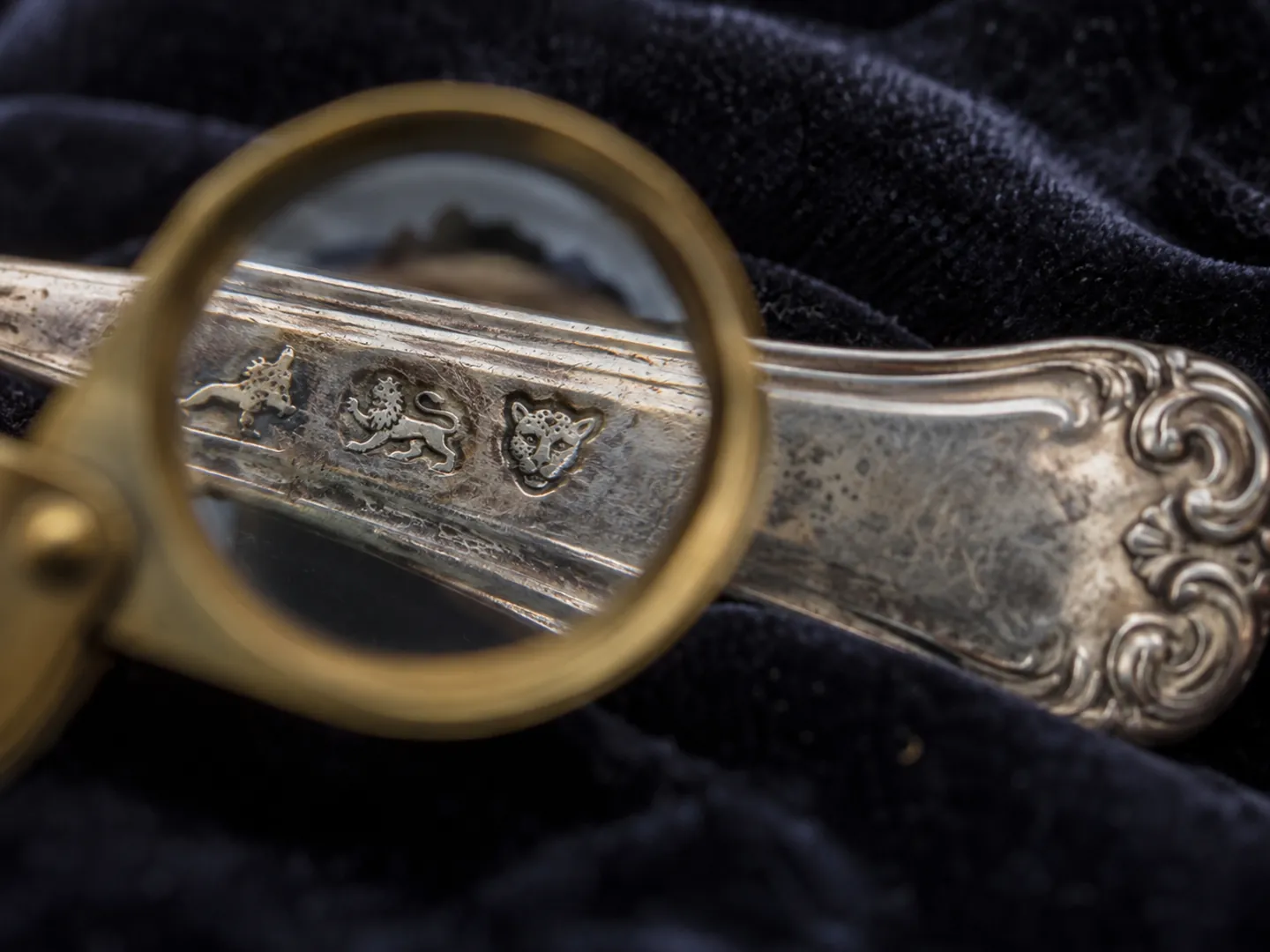
A statute of 1300 required silver to be of sterling standard and sent wardens of the craft from shop to shop to test it and stamp the leopard's head mark.
STERLING · ASSAY OFFICE
100+
Livery companies today
In 1515 there were 48 companies. Today there are more than 100, including over 30 modern companies for professions such as accountants, surveyors and architects.
LIVERY COMPANIES · WCI
The earliest surviving guild charter in London was granted to the Weavers' Company in 1155, and the peak period for forming guilds was the 14th century.
READ A UK HALLMARK
Three marks tell the story.
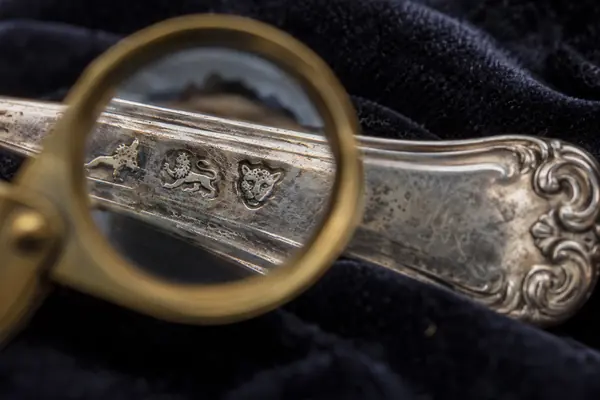
Look on the back or inside of a piece with a magnifier. A UK hallmark struck by an assay office has three compulsory marks, and may have two optional ones.
Sponsor's mark
Shows who made or submitted the item. It must be registered with an assay office.
Fineness mark
Confirms the precious metal content, for example sterling silver at 92.5% pure.
Assay office mark
Shows which of the four UK offices tested it: Birmingham, Edinburgh, London or Sheffield.
Optional extras
A pictorial mark, such as the sterling silver lion, and a date letter whose style shows the year.
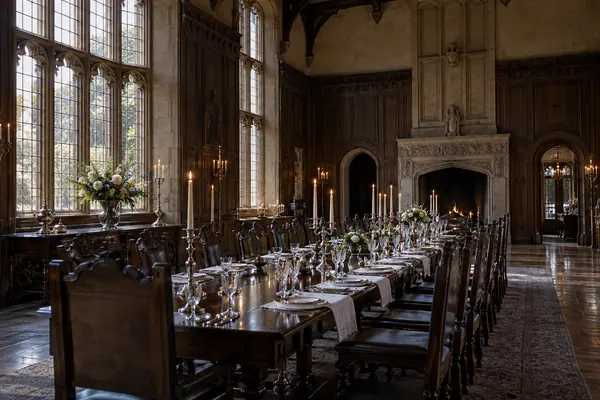
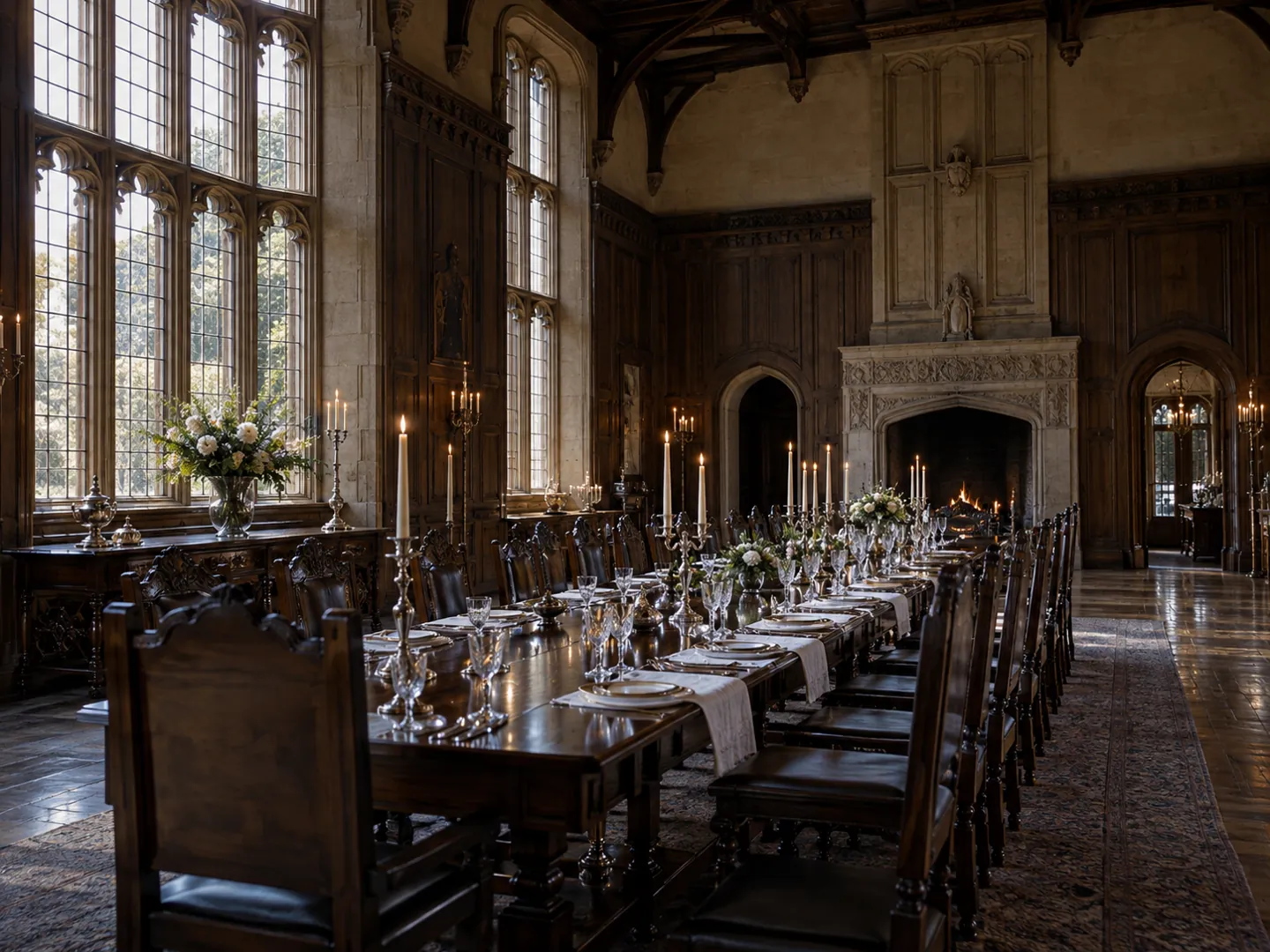
AI-generated image, not a photograph of a real person or place.AI-generated image, not a photograph of a real person or place.
HOW GUILDS WORKED
More than a trade club.
Guilds set up halls that served as meeting places and as venues for settling trade disputes. London street names still recall where individual trades gathered. Early guilds were also duty-bound to care for members in sickness and old age.
Training was central from the start. From the 1870s the companies extended it to technical education, and the City and Guilds Institute, founded in 1878, is still prominent in vocational education today.
Questions
Questions people ask
What was a medieval guild?
A group of people in the same craft who organised together to regulate competition within their trade and maintain high standards. In London some guilds trace their origins to the 12th century.
Why are they called livery companies?
Some guilds introduced their own distinctive clothing and regalia, known as livery, to set their members apart from other guilds, and they became known as livery companies.
Where does the word hallmark come from?
The London Assay Office says that once Goldsmiths' Hall became the home of a permanent assay office in the late 15th century, it is probably from this that the term hallmark originates.
Does all gold and silver jewellery have to be hallmarked?
Items sold as precious metal must be hallmarked unless they are under the exemption weight: 1 g for gold and palladium, 7.78 g for silver and 0.5 g for platinum. Coins are also exempt.
Do guilds still exist?
Yes. There are more than 100 livery companies in the City of London today, supporting trade, education, charity and fellowship, and new modern companies represent professions.